Saturday, January 17, 2009

Change We Can Believe In: Barack Obama's Plan to Renew America's Promise


This calm, straightforward book reminds me why I have a "Women for Obama" bumper sticker on my truck. It's short on rhetoric, long on clear-headed, specific ideas on how to fix America's problems. In back are seven key speeches from this long presidential campaign, speeches so beautifully written they read like poetry. Any voter wanting to know more about who Barack Obama is and what he stands for should read this book.


In essence, it's a glimpse into what Obama will do as president, why these actions are smart, and how he'll get the plan done. It's like a presidential crystal ball, letting readers know what they're voting for -- or against.


Change We Can Believe In was put together by Obama for America, with a foreword by the candidate. Net proceeds from book sales will be donated to charity.


The speeches soar. The "race" speech Obama gave in Philadelphia is striking in its honesty: it is from a leader, not a politician. From the New Hampshire Primary Night speech: "And so tomorrow, as we take this campaign south and west, as we learn that the struggles of the textile worker in Spartanburg are not so different than the plight of the dishwasher in Las Vegas; that the hopes of the little girl who goes to a crumbling school in Dillon are the same as the dreams of the boy who learns on the streets of L.A.; we will remember that there is something happening in America: that we are not as divided as our politics suggests; that we are one people; we are one nation; and together, we will begin the next great chapter in America's story with three words that will ring from coast to coast; from sea to shining sea. Yes. We. Can."


Here's the chapter list:


Foreword by Barack Obama Part One:


The Plan Introduction:


Hope for America


1. Reviving Our Economy: Strengthening the Middle Class

* Provide immediate relief with an emergency economic plan

* Economic security and opportunity for all American families

* Affordable health care for all Americans

* Empower families to succeed

* Restore trust, return to fiscal responsibility


2. Investing In Our Prosperity: Creating our Economic Future

* Promote our energy independence and create five million green jobs

* A world-class education for every American

* Make America the undisputed leader in science and technology

* Build the infrastructure of the twenty-first century

* Help our small businesses and manufacturers thrive and create jobs

* Compete and thrive in the global economy


3. Rebuilding America's Leadership: Restoring our Place in the World

* End the war in Iraq responsibly

* Finish the fight against Al Qaeda and turn the tide against global terrorism

* Rebuild a strong twenty-first-century military

* Stop the spread of nuclear weapons

* Renew our alliances to meet new global challenges


4. Perfecting Our Union: Embracing America's Values

* Restore trust in government and clean up Washington

* Make voluntary citizen service universal

* Partner with communities of faith

* Strengthen families

* Advance equal opportunity for all Americans

* Secure our borders and reform a broken immigration system

* Safeguard the environment for future generations

* Honor sportsmen and protect the great outdoors

* Fight crime and promote public safety


Conclusion: Yes We Can


Part Two: The Call


Declaration of Candidacy, Feb. 10, 2007, Springfield, Illinois


Iowa Caucus Night, Jan. 3, 2008, Des Moines, Iowa


New Hampshire Primary Night, Jan. 8, 2008, Nashua, New Hampshire


A More Perfect Union, March 18, 2008, Philadelphia, Pennsylvania


Father's Day 2008, June 15, 2008, Chicago, Illinois


Renewing American Competitiveness, June 16, 2008, Flint, Michigan


A World That Stands As One, July 24, 2008, Berlin, Germany


Reviewed By : Julie Neal "The Complete Walt Disney World" : Sep 9, 2008


Thursday, January 15, 2009

Frommer’s® 500 Places to See Before They Disappear


As an editor at Frommer's travel guides, I have one big regret: that Hurricane Katrina beat me to New Orleans. It's sad and even a little embarrassing that I canceled plans to go not once but twice before it was too late. I'll always have the zydeco and jazz records that made me want to visit so badly, but the city as it was will remain a void in my experience. It's irreplaceable.


500 Places to See Before They Disappear is, like the jacket says, a "celebration of the world's most fragile wonders." It's also an inspiring memorial to treasures like New Orleans, sunken so suddenly and unpredictably that a book probably couldn't have saved it. But imagine knowing that outsiders and ordinary citizens could have done more to keep the levees from breaking: Would we have stayed home? Or would more of us have visited sooner rather than later, fallen in love, and rallied to do all we could to preserve a city unlike any other in the world? In its memory, will we let other singular places go? This book will leave you asking these questions not just about New Orleans--championed in the "Cityscapes in Peril" section--but also about Venice, the old Jewish ghetto in Budapest, the hutong neighborhoods of Beijing, the melting snows of Kilimanjaro, the wild white horses of the Camargue, and hundreds of other rare towns, landscapes, monuments, and habitats with uncertain futures in the face of environmental and human threats.


We read of imperiled species, wilderness areas, and cultural relics every day in the news, we see them on the Travel Channel, or we live near them and lobby for their protection. This book gathers a worldwide range of the neediest or most extraordinary sites under one cover. The reviews are richly evocative but pithy; you can savor them piecemeal, allowing them to sink into your daily awareness, making the news stories about each one a little more resonant--not as good as being there, but good enough to inspire a trip and maybe even a commitment to help keep a special place out of harm's way. --Maureen Clarke, senior editor, Frommer's


Reviewed By : Maureen Clarke : Nov 14, 2008


Sunday, January 11, 2009

1,000 Places to See Before You Die: A Traveler's Life List


The spirit of this book is well exemplified by a quotation from Mark Twain (Page xv): "Twenty years from now you will be more disappointed by the things you didn't do than by the ones you did. So throw off the bowlines. Sail away from the safe harbor. Catch the tide winds in your sails. Explore. Dream. Discover." So, the author advances a listing of places throughout the world worth discovering. This is a companion piece to another volume of hers, in which she explores 1,000 places to see within the United States.


The world is divided into eight regions, for the purposes of organizing discussion: Europe; Africa; the Middle East; Asia; Australia, New Zealand, and the Pacific Islands; the United States and Canada; Latin America; the Caribbean, Bahamas, and Bermuda.


In a brief review here, it would be impossible to illustrate each region in any depth. Maybe some samples from a few of the regions. Needless to say, any selection like this is apt to engender discussion--Why were some places left out? Why were others included? But that's part of the fun of a book like this!


Europe: Some of the usual suspects like Windsor Castle, Winchester Cathedral, London, the Salzburg Festival, Vienna, Paris, Versailles, the Brandenburg Gate, and the Sistine Chapel. But there are other treasures as well: Bellagio, Rhodes, Ile de Re, Kinsale, and Ludlow.


Africa: The Great Pyramids, Abu Simbel, Jack's Camp in the Kalahari Desert, the Cape Winelands, and so on.


United States and Canada: Kenai Peninsula, Monterey Peninsula, Telluride, South Beach, Art Institute of Chicago (one of my favorite art museums), Art Gallery of Ontario, Nimmo Bay Resort, Polar Bear Safari, and the like.


This is fun simply to browse. Choose a page at random and fantasize a trip there. . . . Again, lots of fun!


Reviewed By : Steven A. Peterson : Aug 5, 2008


Saturday, January 10, 2009

Journeys of a Lifetime: 500 of the World's Greatest Trips


Journeys of a Lifetime: 500 of the World's Greatest Trips

If you take one trip a year and never go to the same place twice, even the most fortunate person will probably visit no more than 50 different places in a lifetime. What a great idea it is to be more aware of what your choices are before taking one of those 50 trips.

The book is organized around nine themes as described thusly on the contents page:

1. Across Water (Unforgettable voyages, from luxury cruises to dugout canoes)
2. By Road (Chasing the horizon: legendary drives and secret detours)
3. By Rail (Watching the world pass by your window)
4. On Foot (The pleasures of the oldest and greenest mode of travel)
5. In Search of Culture (Life-enhancing odysseys for lovers of all the arts)
6. In Gourmet Heaven (Seeking out the world of flavors)
7. Into the Action (Hands-on adventures for those who'd rather do it for themselves)
8. Up and Away (Flights, skyways, and bird's-eye views)
9. In Their Footsteps (Pilgrimages for readers, dreamers, and history fans)

Typical trip choices are usually described in one or two pages with color photographs and maps taking up at least half of the space. An entry contains brief advice on when to go, how long the trips last, how far ahead to plan, special packing advice, and Web sites for more information. Highlights of such a trip are also briefly described so you can get a sense of what you'll see and do. Some trips are, however, listed in as little as a paragraph.

Naturally, you have to judge a book like this very carefully. By definition, you haven't taken most of the trips!

I looked at trips I've taken that were terrific and noticed some weaknesses in the advice. Here are a few examples:

1. Each entry is treated as though there's nothing else nearby that might be of interest. As a result, you need to check the geographies to see how you might combine several trips listed in the book into one. For example, many of the New England trips are located not too far from one another and you should consider doing more than one on a visit.
2. The timing of how to enjoy other events isn't always considered in enough detail. For instance, Boston's Freedom Trail is listed in the book. But you aren't told that if you come around Patriot's Day (a Monday in April) you can also see re-enactments of the battles of Lexington and Concord and the running of the Boston Marathon on the same trip.
3. Some of the advice seemed just plain wrong from my point of view. When I went to the Galapagos, I was there for 10 days in the dry season and 4 days in the wet season. The wet season was awful! People there said to be sure to always come in the dry season (which ends around the beginning of winter in North America). The book made no mention of this issue in discussing when to go. Also, many of the most interesting things to do in the Galapagos aren't mentioned.

As a result, use this book to start dreaming a little about what you might go see. I was fascinated by some of the choices for Australia and New Zealand that I had never heard of but which looked very beautiful. But do plenty of homework beyond the book to find out what you really need to know before choosing and organizing a trip.

Bon voyage!

Reviewed By : Donald Mitchell "a Practical Optimist" : Jan 30, 2008

Click to see Book Details & Price of Journeys of a Lifetime: 500 of the World's Greatest Trips

Eclipse (The Twilight Saga, Book 3)


Eclipse (The Twilight Saga, Book 3)

I wasn't really sure how to rate these books, because in terms of literary quality they're certainly one star. Yet, they're so delightfully cheesy that in terms of entertainment value, they probably rate a 5-star review. Of course, I'm the girl that adores awful monster movies on the SciFi channel, so maybe you shouldn't trust my judgment. :)

But really folks these books are absolutely ridiculous. They're so over the top they read like parodies of supernatural romance novels. The characters' motivations and reactions defy any sort of real world logic. These books just don't make any sense. Like here's my main problem with the series: What in the world do all of these people see in Bella? And I'm not just talking about Edward and Jacob. That also includes Mike Newton, the entire Cullen family, Angela, and even Victoria and James from the first book. The entire Twilight universe revolves around Bella. Everyone is obsessed with this girl. Why? She's whiny, hypocritical, self-obsessed, co-dependent, moody, childish, sulky, I could go on, you get my drift. She has no goals, ambitions, hobbies, dreams, or talents. She shows no interest in the world around her. She basically shows disdain and/or contempt for anyone in her life who isn't impossibly beautiful or superpowered--including her own parents. Her one goal in life is to become a vampire so she can live forever, be impossibly beautiful and strong, and never age. Yes, this is our heroine, people. Was I the only one rooting for Victoria to knock the hell out of her?

Then of course there's Edward. I believe I've read in SM's own words that Edward is her idea of the perfect man. I guess we'll just have to agree to disagree on that one. And let me just say that I don't care how beautiful and gorgeous and perfect and wonderful a character is--NO ONE deserves to have 300 pages telling us these things. If a character is supposed to be beautiful then I only need to be told that once, and then I'm looking for their more interesting aspects. If their beauty is brought up more than once than I'm going to assume that it's signficant to the story somehow...it relates to the plot, it's an ironic contrast to their not so beautiful inside, it serves as commentary for cultural perspectives on beauty. I don't want to get the idea that I'm reading about Edward's crooked smile, or bronze hair, or perfect chiseled features, or muscular chest over and over again because the author is imagining herself as the object of his affection and likes reminding everyone of how gorgeous he is.

And Jacob...how did he go from a sweet kid to a rapist-in-training? And why is SM so convinced that we're all going to adore this twerp as much as she does? That said, as a character, he's still 1000 times more believable and better developed than Edward.

Basically this book had so many unintentionally hilarious moments that I was imagining it as an episode of Mystery Science Theater 3000. There was Charlie's utterly bizarre reaction to Bella's breaking her hand...(What's that? You tried to sexually assault my daughter? And she injured herself? Way to go tiger!) Bella's stupidity after Rosalie's backstory (Hmm...I think she's trying to tell me something about life and humanity and family, but all I can really focus on is that some hot vampire chick once came onto Edward..WAAAHHHH Edward!) Edward's rather psycho definition of love( He basically says "I don't care about anyone else. I only care about you. Only you matter.") And the vampires' reactions (or rather non reaction) to the murder of the new vampire Bree disturbed me. They basically do nothing and have no reaction when a teenage girl is ripped to pieces right in front of them. Six months ago she was probably a normal teenager and now she's a pile of ashes and not one of the saintly "good" vampires even bothers to say "Poor girl. I wonder if her family is looking for her?" And these are the people that Bella wants to hang with for eternity?

Hey I won't lie, I'll probably be buying the 4th book, but I have no expectations of quality or literary value, only that I'm going to entertained by more cheap melodrama and cheesy, pseudo-sensuality.

Reviewed By : gaimangirl "fangirl extraordinaire"

Click to see Book Details & Price of Eclipse The Twilight Saga Book

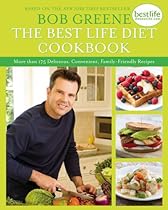
The Best Life Diet Cookbook: More than 175 Delicious, Convenient, Family-Friendly Recipes


The Best Life Diet Cookbook: More than 175 Delicious, Convenient, Family-Friendly Recipes

Best-life advocate Bob Greene positions the ideas in this cookbook as a "gift that you give to yourself and your loved ones." Home-cooked meals made from fresh, natural ingredients will make you feel better, live longer and bond with your family and friends. Makes sense to me. And if you just want to cook yummy foods, these dishes are delicious.

They are also nutritious, and all the details for each serving are at the end of each recipe: calories, protein, carbohydrate, dietary fiber, sugar, total fat, saturated fat, cholesterol, calcium and sodium.

Easy-to-follow meal plans are broken down into three sections. Quick and Easy meals take no more than 20 minutes to prepare, Kitchen Connoisseur choices are a little more adventurous, and Family-Friendly meals offer healthy versions of family favorites. Each meal plan has six calorie levels: 1,500, 1,600, 1,700, 1,800, 2,000 and 2,500 calories a day.

Although most of the recipes are geared to busy families with little time to spend in the kitchen, there is a whole chapter of wonderful, healthy dishes from accomplished chefs. These recipes may take a little longer than the 30 minutes or so the other recipes require to prepare. Some of the chefs participating include Mollie Ahlstrand of Trattoria Mollie, Dan Barber of Blue Hill, Sarma Melngailis of Pure Food and Wine, Charlie Trotter of Charlie Trotter's and Roy Yamaguchi of the 35 Roy's Restaurants around the world. Ahlstrand's Zuppa di Pomodoro is a flavorful take on tomato soup that uses garlic, brandy, rosemary and orange juice.

In the back is a handy Techniques tutorial showing how to roast garlic, toast nuts, section citrus, clarify butter and the like.

Other good choices for healthy cookbooks include Deceptively Delicious, Hungry Girl: Recipes and Survival Strategies for Guilt-Free Eating in the Real World and The Most Decadent Diet Ever.

The Eat This Not That! series is also excellent.

Here's the chapter list:
1. Introduction
2. Recipes
3. Breakfast
4. Soups
5. Salads
6. Sandwiches, Wraps and Crispbreads
7. Entrees: Meat, Poultry, Seafood, Vegetarian
8. Side Dishes: Grains, Vegetables
9. Calcium-Rich Snacks
10. Desserts
11. Best-Life Recipes from World-Class Chefs
12. Meal Plans
13. Basic Recipes
14. Techniques

Reviewed By : Julie Neal "The Complete Walt Disney World" : Jan 8, 2009

Click to see Book Details & Price of The Best Life Diet Cookbook

Thursday, January 8, 2009

Jeffrey Gitomer's Little Teal Book of Trust: How to Earn It, Grow It, and Keep It to Become a Trusted Advisor in Sales, Business and Life (Jeffrey Git


Jeffrey Gitomer's Little Teal Book of Trust: How to Earn It, Grow It, and Keep It to Become a Trusted Advisor in Sales, Business and Life (Jeffrey Gitomer's Little Books)

This is an important and excellent book. (You will maybe appreciate my tongue-in-cheek headline after reading the first Chapter.)

Like so many others, I am a huge fan of Jeff Gitomers' sage, straightforward advice on selling and subjects tangentially related to his core expertise in the sales process. But, Gitomer has outdone himself with this absolute gem.

In a world where (some) businesses and politicians are almost daily demonstrating why they can't be trusted, the subject of "trust" needs to be written about. And, this well timed book is a great primer on the subject.

Now writing about "trust" is not easy. Who is a "trust" expert? Well the subject is a perfect one for Gitomer who manages to plead for us to do things better in a style that doesn't come over as unduly "preachy." And, he does so with his usual well organized, logical explanations. He does a great job of succinctly explaining the context of trust, it's benefits and ultimately its value, more than 20 characteristics of trust, and how to recover from a breach of trust (which can happen among us humans).

Best of all, his thoughts on becoming a trusted business advisor make this a book that every professional should read, study, implement and then re-read. As an advisor to leading professional service firms, I have already started giving the book to clients.

Regretfully, I expect that some who need this book most will never buy it as they see themselves as already fully trustworthy. Respectfully, I would suggest that few among us would not benefit from a tune-up in this area. Including the many whom start off conversations, as I did this review, with the commonly used phrase "trust me."

As an voracious reader of business and self-help books (and a reviewer here on Amazon of the best of that which I read), I consider this one of the most important books, in those two categories, in the last ten years. It really is that good! And that important!!

Reviewed By : D. Carpenter "Peak Performance Scholar" : Jan 6, 2009

Click to see Book Details & Price Jeffrey Gitomer's Little Teal Book of Trust

Wednesday, January 7, 2009

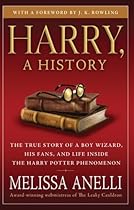
Harry, A History: The True Story of a Boy Wizard, His Fans, and Life Inside the Harry Potter


Harry, A History: The True Story of a Boy Wizard, His Fans, and Life Inside the Harry Potter

Though there have been many dozens of books attempting to chronicle the particulars of Harry Potter fandom in all its dimensions -- the fan fiction, the Wizard Rock, the websites, the conventions, et al. -- all have fallen short because of the inherent difficulty in condensing its breadth and scope to manageable size; but this one admirably compacts ten, detailed years of Harry Potter history in its 356 pages, and covers the subject thoroughly.

It's a given that, if you know of Melissa's Leaky Cauldron website, you'll find this book to be an extension of the website, and delightfully so; but the real surprise for me was that it not only is for the die-hard fans but the rest of the world who are wondering, "What's all the excitement about?" This book answers that question.

In its pages, Melissa Anelli thoroughly covers Harry Potter fandom in a way that could only be done by an insider, by someone who has had access to virtually everyone of note in the Harry Potter community, fan and pro, and also what she calls "Team Potter" -- Rowling's publishers, agents, lawyers -- the professional team who rarely give access or interviews to their inner workings, and, most significantly, Rowling herself, a "first" for any book written about her. That "Team Potter" allowed Melissa access speaks volumes about their professional respect for her, which is why The Leaky Cauldron (a reference to a beloved inn and favorite watering hole in Rowling's wizarding world) is considered the best, most reliable source of news in Harry Potter fandom. (This year, especially, has been trying and divisive for fans, because of the trial between RDR Books and Rowling. During that regrettable and sordid episode, it was The Leaky Cauldron that was the voice of reason.)

In reading Melissa's first-hand account of what's happened in Harry Potter fandom and the book/movie worlds drawn from the seven Harry Potter novels, it's as if you're right there with her, being caught up in all the excitement: from public events to behind-the-scenes closed-door sessions, Melissa shares it all; and with its sense of immediacy, I found reading this book to be an intimate reading experience. The writing tone is in keeping with the infectious enthusiasm that characterizes most of Harry Potter fandom, and why fans are still, more than ever, pumped up about a boy named Harry. (And Severus Snape. And Professor Dumbledore. And the rest of the colorful characters in the wizarding world.)

A journalist with real-world credentials (she was a reporter for a New York newspaper), Melissa properly starts, and ends, the book with a discussion about the last Harry Potter novel, HARRY POTTER AND THE DEATHLY HALLOWS. In coming full circle, there's a sense of closure, of course, and rightly so; but as 2008 has shown, Rowling has not retired, so there's more, much more, that is grist for the mill for a future edition: the publication of BEEDLE THE BARD, for one, and its eye-popping, record-setting price realized at auction for one of seven hand-written copies; and, of course, the Rowling/Warner Bros. vs. RDR Books trial, which was the subject of some of the looniest mainstream reportage I've ever read. (Like many others, I relied on The Leaky Cauldron for fair and balanced coverage. And it ain't over yet: RDR Books has filed an appeal.)

A bonus: There's also an eight-page photo insert (black-and-white photos), with some fascinating pictures: candid shots at Harry Potter fan events, photos of Rowling, and some photos of the author with some guy named Daniel Radcliffe, and Rowling herself + her PI (personal assistant), Fiddy Henderson.

At $16, the retail price, the book is a good buy, but at the discounted price on Amazon, it's a GREAT buy, and deserves a place in the library of anyone who has enjoyed the Harry Potter novels and wants a book that accurately puts the Harry Potter phenomenon in context.

Bottom line: This book is WELL worth your time and money, especially if you are too young to have been there when all of this went down, or if you're new to the Harry Potter world and want to know what all the fuss is about.

Reviewed By : George Beahm www.georgebeahm.com

Click to see Book Details & Price of Harry, A History

The Tales of Beedle the Bard


Everything written with the pen of JK Rowling seems to be magical, and this volume is no exception. The very genesis of this book is so special: the tales in it, we are told, were left to Hogwarts by the great Professor Dumbledore. The style and sentiment of these five little fables will come as no surprise to anyone who is a Harry Potter fan -- in fact one of them should already be well known to all. "The Tale of the Three Brothers" was first told in Book 7 of the Harry Potter series. It is such a simple yet strong tale with such a forceful message (much like all of JK Rowling's tales) of the difficulty of making hard choices and being the master of one's own fate. I have read this fable to my sons who are still pondering its message.


No one less than Hermione Granger serves as the translator of these works, and Ms. Rowling has included with the text Dumbledore's commentary and some wonderful illustrations of her own. The simplicity of the tales only underscores the wonderful messages they bear in terms that are not at all preachy. In many ways, the stories remind me of many standard fairy tales, such as those written by Aesop or the Brothers Grimm, but in a context much more likely to appeal to young children as well as the magic lovers among us. It has always amazed me that anyone could find anything in Rowling's work that is somehow not wholesome. Her messages as always are clear, simple, direct and as important life lessons as children will ever learn: the use and abuse of power; the benefit of working together; being able to recognize and value what is special in each of us; the dangers of working with the dark arts (i.e., the abuse of power). It is no wonder that her work is so loved and so enduring. I will treasure this volume as I have treasured all of the Harry Potter books. Only one of the fables is a bit too dark for me (The Warlock's Hairy Heart); I'm not sure I will read it to my kids as it is a bit gruesome.


I have not yet received the Collector's Edition that I pre-ordered. I know that there is much speculation that this edition may have been over-subscribed. My order information indicates that I should receive it December 8th. I certainly hope I do, but if not, I notice that it is already for sale on ebay, and most sellers are not seeking to gouge people too badly. The real disappointment in ordering it on ebay would be losing out on the chance to make a contribution to Ms. Rowling's wonderful charity, The Children's Voice Campaign. But I think I might just make a separate contribution, as a small return for the many wonderful hours of reading and reflection she has given me!


Reviewed By : Laura "bookworm" : Dec 4, 2008


Tuesday, January 6, 2009

The 7 Habits of Highly Effective People


Dr Covey has written a book with some valuable points, which would be useful for any person to remember and apply. Although some say that they're common sense, sometimes we need reminding of common sense. Being proactive (i.e. doing something is better than doing nothing), starting with the end in sight (i.e. visualise what you really want and plan to get it), putting first-things-first (i.e. don't procrastinate), think Win-win (obviously valuable), and Seek-first-to-understand-then-to-be-understood are all useful and valuable habits. The idea of being principle-centred is also worth examining, as is the idea of concentrating on your circle of influence.


However, this book could have been much shorter; probably less than half the length. Dale Carnegie covered many of the ideas fifty years earlier, and wrote more clearly. Dr Covey's writing style would have George Orwell spinning in his grave. Like many authors in the 'self-help' genre, Dr Covey's writing is imprecise, long-winded, laden with exaggeration, and littered with clichés.


The 'Synergize' chapter should simply be excised; Dr Covey spends an entire chapter gushing about situations in which enthusiastic people got together, opened-up, became excited, and produced something wonderful. That isn't a habit; it's an effect. It's all very nice when it happens, but it ignores the situations where enthusiastic people get together, open-up, become excited, and produce something terrible or utterly disastrous because they were all too excited to examine risk. Late-90's dot-com companies in particular spring to mind. Extraordinary Popular Delusions and the Madness of Crowds was written about this phenomenon.


Dr Covey's advice relating to tyrannical bosses is awful. I would expect that anyone who adopts Dr Covey's advice in a situation where they are forced to deal with a sociopath is about to discover the meaning of 'disappointment'. Dr Covey makes the error of assuming that deep-down, all people are reasonable... if they were, his ideas would work. Unfortunately, they are not, and adopting Dr Covey's techniques with a sociopathic manipulator (they're more common than you think), or even worse, a sycophantic group of sociopaths, is a recipe for disaster. Sometimes, the best advice is 'get as far as you can from that person and situation, as fast as you can'; I doubt whether Dr Covey has ever given anyone that advice.


This leads me to another thread common to self-help writers; the unwillingness to admit that their approaches won't necessarily work for all people in all situations, and the accompanying focus on only the positive outcomes that can come from following their advice. Dr Covey's book is an example of this; no warnings, no caveats; the whole thing is presented as a path to salvation.


Finally, the anecdotes... they're tedious. One after the other, we hear unverifiable anecdotes, which could have just as easily have been invented. Or they could be completely one-sided; the other people in the situation may have had a completely different interpretation. I couldn't help when reading the book but wonder if Dr Covey's anecdotes were all that they seemed.


So there you have it; a middling book which promises much and delivers some. This book is worth a read if you go in with your eyes open, and think critically. But for the impressionable reader (it is often impressionable people who buy self-help books) some parts of the book may lead to disappointment.


Reviewed By : Kim D. Mason : Aug 31, 2008


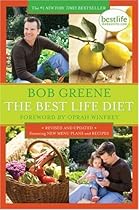
The Best Life Diet Revised and Updated


If I could have ranked this book 4 1/2 stars, I would have. It contains solid information that would certainly benefit anyone and lead to slow and steady weight loss, but I would take off 1/2 a star since none of this information is groundbreaking or innovative. What I do like about this book, compared to Bob Greene's previously released Total Body Makeover book, is that this program is more doable by someone who has a life outside the gym, which is extremely important, since many Americans go on diets, but very few stay on them.


The program is divided into 3 phases. The first phase is basically designed to ease you into a program of healthier eating habits (focused more on the habits, like snacking, not eating within a few hours before bedtime, etc., rather than on limiting foods) and increased movement. Nothing extreme here - I like this aspect of this phase, as for most people, starting right up with a perfectly clean diet and an hour or more of exercise each day is too much (hence my problem with Greene's Total Body Makeover). The second phase is the real weight-loss phase with increased emphasis on "clean eating" by eliminating 6 empty or problem foods from your diet. Again, I like this approach because it makes it much more doable than cutting out all of your bad habits (I'm assuming that most of us have more than 6 - I certainly do) cold turkey. Increased activity is also an important aspect of phase 2. Finally, phase 3 is the "lifestyle" phase of the diet, which is more a lifetime fitness and eating plan than a diet. Recommended daily eating plans (including a 7-day diet diary of Oprah), and some tasty recipes (with lovely photos) are also included.


Finally, as with all of Bob Greene's books, there is direction for focusing in on your reasons for overeating, being overweight, and eating the wrong foods, i.e., the "emotional eating" aspect of weight problems. I particularly agree with Greene's assertion early in the book that in order to address your weight, you must first address your life. I know from my own experience, that when I find myself eating poorly, or eating in excess, or not exercising consistently, it is because of what is going on in my head, and not what is going on in my body.


Ultimately, I think this book is a great addition to one's health and fitness library. In my opinion, it takes the best of Bob Greene's earlier books and puts them into one, concise and doable program, which will provide weight loss and weight management that lasts and not merely a quick and temporary fix.


Reviewed By : K. Walters "Lover of fitness, politics, readei... : Dec 28, 2006


The Secret


You don't need this book. You already know everything you need to know to be wise and prosperous. It's already inside of you. Everyone is looking for some magic formula which will allow them to be happy and successful. We all believe that there is some "secret of life" that we need to plug into, and then our fears and angst will disappear and we will glide effortlessly through the cosmos into blissful well-being.


Well, look no further. I am going to reveal to you the Ultimate Secret, and it is not going to cost you a penny! Are you ready? Here it is: The secret of life is... that THERE IS NO SECRET!


It sounds like pablum doesn't it? But only about 5% of the people who read this are going to understand it and believe it. I challenge you to embrace this thought and analyze it. Take it to its logical conclusion, and when you can truly accept this wisdom, you will be able to shed your fears and angst. You may not reach a point where you feel that you are gliding effortlessly through the cosmos, but you will be well on the path toward that utopia. And you will resonate with a happiness you never before thought possible.


I am a firm believer in the Law of Attraction. And I am a devout believer that we are all exactly where we are supposed to be. We truly do create our own destiny. We are always at a place which has been created by the sum total of our thoughts and actions to this point in time. I will take this dictum a step further: We are all exactly where we WANT to be!


You say, "But I want to be a medical doctor, and I am not there!" I answer, "You would be there if you had taken the appropriate actions and trained your thinking to be there. You would have studied what you needed in school to prepare yourself for college and then medical school -- if you truly wanted to be a doctor."


You say, "But I wanted to be a professional basketball player!" I answer, "If you truly wanted that, you would have spent all your waking hours practicing dribbling, passing, shooting, and studying court and team dynamics."


You see, its really that simple. There is no secret other than focusing on a goal and then doing what it takes to get there. Most of us, however, find it far too easy to be lazy and then believe the excuses that we provide for ourselves.


No, you don't need this book. It's philosophy can be summed up quite robustly in one, simple, Biblical phrase: "As ye sow, so shall ye reap." This is the Law of Attraction, and it truly works. It's not magic and it's not a secret. It is a universal, irrefutable, and immutable principle. If you bequeath peace and harmony to those around you, you will recieve peace and harmony. If you disseminate good will and love, you will be blessed with good will and love. If, however, you emanate ill-will and a cynical attitude, that is what you will receive from the world.


No, you don't need this book... but I highly recommend it. You see, as simple as it is to get what we want out of life, we have to overcome all of our past conditioning, all of our negativiy, and all of the bad habits we have spent a lifetime to form. It's very simple, but it is anything but easy! This book will help you to condition your toughts to break your inertia and get rid of bad habits of thought.


Start with this book as your point of departure into a new conciousness, a new awareness, and a new philosophy of life. Then read some of the other excellent books which other reviewers have recommended. You will find that it is easier to be a benfactor than a burden. Offer the best of yourself to the world, and then prepare yourself to receive in abundance!


Reviewed By : Ralph C. Alderson "perennial student" : Feb 20, 2007


Monday, January 5, 2009

Dreams from My Father: A Story of Race and Inheritance


U.S. Senate hopeful Barack Obama has an inspiring story to share, and yet he doesn't simply rest on his laurels in this critical evaluation of his life and in his continuing search for himself as a black American. He wrote "Dreams From My Father: A Story of Race and Inheritance" almost ten years ago, but his stock has obviously surged since his star-making speech at the Democratic National Convention last month, perhaps to the chagrin of Hillary Clinton...unless she is dreaming of a Clinton-Obama ticket in 2008! Growing up mulatto in Hawaii and Indonesia, Obama discusses trying to come to grips with his racial identity through a period of rebellion that included drug use, becoming a community activist in Chicago and traveling to Kenya to understand his father's past. It is in Kenya where he discovers a nation with forty different tribes, each of them saddled with stereotypes of the others. It is also in Kenya where he recognizes the dichotomy that has been his lifelong existence between the graves of his father and his grandfather. His description of this defining moment is worthy of a passage in Alex Haley's "Roots".


Obama is also candid about racism, poverty and corruption in Chicago, and he pulls no punches in his account of this period. Because the book stops in 1995, it does not get into much detail on his learning experiences, culminating in both missteps and triumphs, as a state legislator. For all the value the book provides on Obama's history, I would have appreciated a more substantive update than the preface on the last decade, as he gained political prominence in Illinois, so that we understand more why his time in the spotlight has come at this moment. Perhaps that will be Volume 2. I was also disappointed he spent so little time writing about his mother and the influence her side of the family has had on him, a narrative gap Obama acknowledges and over which he expresses regret in the preface. Perhaps inclusion of such details would have made for a less compelling story from his originally intended Afro-centric perspective; but at the same time, I think a more balanced look at his own racial dichotomy would have made his story resonate all the more given where he is now.


Obama is open in the preface about using changed names and composite characters to expedite the flow and ensure privacy of those around him, but it does somewhat lessen the impact of his story when one starts to wonder who was real and who was a fictionalized character. Regardless of these literary devices, this book is still a very worthwhile look into the background of someone who is on a major upward trajectory in the current national political scene.


Reviewed By : Ed Uyeshima : Aug 30, 2004


The Power of Soul: The Way to Heal, Rejuvenate, Transform, and Enlighten All Life


The Power of Soul is an amazing book about the soul and the soul journey. It is simple to read and follow. It is profound and deep in wisdom. It is a book you can read over and over again and learn something new every time. There is wisdom within the wisdom and messages within the messages.


The Power of Soul reveals soul wisdom that you could study with a teacher/master your whole life and never receive. Dr. Sha gives to all so generously. It covers areas such as Soul Basics in Chapter 1, Karma in Chapter 2, Develop the Power of Soul in Chapter 3, and all the way to Soul Enlightenment in Chapter 13. It teaches you the what, why, and how-to's of Soul Healing, Soul Guidance, Soul Prevention, Soul Transformation and much more. It teaches you how to develop the potential power and capabilities of your soul so you can offer more service, be more loving and forgiving, and be a better person in every aspect of life.


I also received 11 Divine Downloads when reading the book. These Divine Downloads instantly increased my own healing, rejuvenation and transformation power. The applications in using them are so simple and easy to do, yet so powerful.


I have read and recommend all of Dr. Sha's books. However, this book - The Power of Soul - is the most powerful one yet. It can open your soul, heart, mind and body in a new ways to the Divine, to the universe. It can change your life. You can truly live from the power of your soul.


Reviewed By : David Lusch : Jan 5, 2009


Sunday, January 4, 2009

Eat This, Not That! Thousands of Simple Food Swaps that Can Save You 10, 20, 30 Pounds--or More!


This is a well-researched, eye-opening report with plenty of information about bad and good foods that are served at well known restaurants.


The book consists of eight chapters, each chapter being focused on a separate issue such as: 1. Foods recommended for every day, and foods to always avoid; 2. The best and worst restaurant meals; 3. Strategies for eating right when dining out; 4. Advice for holiday eating; 5. Strategies for grocery shopping; 6. The ultimate guide to healthy beverages; 7. What to eat in various situations (stress, tiredness, etc.); 8. Eating guide for children


Each chapter provides tons of helpful information presented in a simple, but effective layout. It is an easy and fast reading, with some very nice and helpful pictures. The author made a good job in creating alternative, healthy menus for almost everyone and in any situation.


I especially like the comparison of good and bad meals. For a restaurant of your choice you can find presentation of good and bad meals with detailed information of why they are either good or bad (calories, fat and sodium content, etc).


Of course, it is not possible to list all restaurants in one book so the author concentrates on the chain restaurants that are predominantly known as fast food places. This is a limitation. The other thing that I noticed is that the primary focus is on a fat/sodium contents of the meals discussed. We all know that carbohydrates are not to be ignored when analyzing foods and their effect on our health. This, in my opinion, is a major shortcoming of the book, and for that reason I am subtracting 1 star from the rating.


Otherwise this is a nicely published and useful reference book and I recommend it for all health-conscious people especially those that watch their weight. There is another book that I recommend as extremely useful for planning healthy and not fattening meals. I find especially useful the chapter titled: Obesity - Your Worst Enemy.


Reviewed By : Maclean : July 11, 2008


Saturday, January 3, 2009

Twilight (The Twilight Saga, Book 1)


"Real" Rating: 5+ For any potential readers concerned that this might be a retread of twelve combined seasons of Buffy and Angel, set your fears aside. It's not. That said, now go and buy the book. Buffy and Angel were never set in "our" world - the real world. It was the "Buffy" universe, and/or the "Angel" universe.
At first glance, it seems inconceivable that Bella not realize what Edward is. Most of the requisite indicators are evident. You find yourself reading and wondering how Bella could possibly guess "Peter Parker" instead of "vampire", but then it sinks in. Bella can't conceive of such a thing because this book is firmly, irrevocably set in our world, and that, indeed, is the magic of this story. It is a remarkable accomplishment, often attempted, but rarely achieved, and far more rarely executed with such (apparent) ease.
I did not expect to like this book, and started to read it only as a courtesy to the person who gave it to me for my birthday. But twenty pages in, I was hooked. If we want to follow that metaphor to its inevitable conclusion, I was so hooked that by the time I finished it I was in the fisherman's pail, flopping around as if gasping for air. Instead, I was begging for a sequel. Thankfully, I already knew that the sequel was out. To quote a character from the book, "W - o - w". I haven't sped through something like this since I picked up the first Harry Potter book. Ms. Meyer handled the developing relationship between Edward and Bella with the mark of a seasoned professional, not a first-time novelist. We need to remember that this is coming-of-age book, or a romance - more a combination of "Catcher in the Rye" and "Pride and Prejudice" than a vampire story.
It certainly has far more in common with those two books than "The Vampire Lestat". (And, of course, Buffy and Angel.) It is very difficult to write a coming-of-age story. Why? It's been done a million times, and finding new material to mine becomes more difficult every month. It's also difficult to write a vampire story. Why? Same reason. Yet those reasons didn't give Ms. Meyers, it seems, any pause. It would have given me considerable pause. Kudos to her bravery. Edward Cullen, the vampire, is perfect - and we are reminded of exactly how perfect nearly too often. While reading the book, I found myself frustrated with the never-ending descriptions of his perfect body, perfect hair, model-like looks (maybe I was jealous?) but then I realized that the book wasn't being written in the third person. It's a first-person narrative, so we're getting the story as *Bella* tells it, and how Bella sees it. His burning black eyes, or warm topaz/butterscotch eyes, are magnets to her, as are every single movement he makes.
It's not difficult to step back into high school and remember your first love (or crush) and recall similar feelings. Their eyes never ceased to captivate you; their smile melted you; when they kissed you, you felt faint. And you felt these things every single time you saw that person. One of the more interesting aspects of the book is that we never get a sense for how unique and beautiful Bella is until we start to see her through Edward's eyes. This being a first-person narrative, it takes a while for the reader to understand how Bella - so awkward that she can trip while walking on a flat surface - could have fascinated such a magnificent...creature. I even questioned it myself while making my way through the book. But again, Ms. Meyer's deft hand brings the realization of how special Bella is very slowly and deliberately - much the way in which we didn't find out why Bella moved to Forks until page 50 or so, and why we never knew exactly why Edward had such a powerful, apparently repulsed reaction to Bella when they first came close to each other. That's just one thing that makes a writer truly exceptional - the ability to hold back, and tell the story as the story needs to be told. Or to put it another way, to know exactly how the story needs to be told. That might just be the most difficult task a writer has.
There are a million ways to tell the story in the writer's head, but to find the right way is often elusive. This was such a remarkable and refreshing story. Even when Buffy and Angel similarities started to pop up, they quickly fell away as Ms. Meyer staked an irrevocable claim to this story as absolutely her own. Nothing borrowed, nothing... The representation of the vampires, their unique talents, and the unique way in which they blend into society is marvelous, and provides a firm backbone to the story. While this is a story that is decidedly told in our world, and while I have said that this is more of a coming-of-age story than a vampire story, there are still vampires in it, and the vampires - the fantastical elements of the story - need to be believable. If not, the entire story, no matter how well told, falls apart, and the reader is left wondering why the vampires are even in the story. Her vampires, and their lore, are distinctly drawn. I wanted to title this review, "My brand of heroin", from a line in the book, but thought twice seeing as it's a young adult book and I didn't want parents or anyone else thinking that I was advocating heroin use, or claiming to be a heroin addict, etc. But this book is absolutely intoxicating and perhaps addictive.
Thankfully, the worst side effect of the intoxication is you might suffer a lack of sleep on *one* night (if you have the time, it shouldn't take much longer), and the addiction - to a book - is harmless. Unless, of course, that book actually contained heroin, and then we'd be talking a bit differently about this one.

Reviewed By : T. Burger