Saturday, January 17, 2009

Change We Can Believe In: Barack Obama's Plan to Renew America's Promise


This calm, straightforward book reminds me why I have a "Women for Obama" bumper sticker on my truck. It's short on rhetoric, long on clear-headed, specific ideas on how to fix America's problems. In back are seven key speeches from this long presidential campaign, speeches so beautifully written they read like poetry. Any voter wanting to know more about who Barack Obama is and what he stands for should read this book.


In essence, it's a glimpse into what Obama will do as president, why these actions are smart, and how he'll get the plan done. It's like a presidential crystal ball, letting readers know what they're voting for -- or against.


Change We Can Believe In was put together by Obama for America, with a foreword by the candidate. Net proceeds from book sales will be donated to charity.


The speeches soar. The "race" speech Obama gave in Philadelphia is striking in its honesty: it is from a leader, not a politician. From the New Hampshire Primary Night speech: "And so tomorrow, as we take this campaign south and west, as we learn that the struggles of the textile worker in Spartanburg are not so different than the plight of the dishwasher in Las Vegas; that the hopes of the little girl who goes to a crumbling school in Dillon are the same as the dreams of the boy who learns on the streets of L.A.; we will remember that there is something happening in America: that we are not as divided as our politics suggests; that we are one people; we are one nation; and together, we will begin the next great chapter in America's story with three words that will ring from coast to coast; from sea to shining sea. Yes. We. Can."


Here's the chapter list:


Foreword by Barack Obama Part One:


The Plan Introduction:


Hope for America


1. Reviving Our Economy: Strengthening the Middle Class

* Provide immediate relief with an emergency economic plan

* Economic security and opportunity for all American families

* Affordable health care for all Americans

* Empower families to succeed

* Restore trust, return to fiscal responsibility


2. Investing In Our Prosperity: Creating our Economic Future

* Promote our energy independence and create five million green jobs

* A world-class education for every American

* Make America the undisputed leader in science and technology

* Build the infrastructure of the twenty-first century

* Help our small businesses and manufacturers thrive and create jobs

* Compete and thrive in the global economy


3. Rebuilding America's Leadership: Restoring our Place in the World

* End the war in Iraq responsibly

* Finish the fight against Al Qaeda and turn the tide against global terrorism

* Rebuild a strong twenty-first-century military

* Stop the spread of nuclear weapons

* Renew our alliances to meet new global challenges


4. Perfecting Our Union: Embracing America's Values

* Restore trust in government and clean up Washington

* Make voluntary citizen service universal

* Partner with communities of faith

* Strengthen families

* Advance equal opportunity for all Americans

* Secure our borders and reform a broken immigration system

* Safeguard the environment for future generations

* Honor sportsmen and protect the great outdoors

* Fight crime and promote public safety


Conclusion: Yes We Can


Part Two: The Call


Declaration of Candidacy, Feb. 10, 2007, Springfield, Illinois


Iowa Caucus Night, Jan. 3, 2008, Des Moines, Iowa


New Hampshire Primary Night, Jan. 8, 2008, Nashua, New Hampshire


A More Perfect Union, March 18, 2008, Philadelphia, Pennsylvania


Father's Day 2008, June 15, 2008, Chicago, Illinois


Renewing American Competitiveness, June 16, 2008, Flint, Michigan


A World That Stands As One, July 24, 2008, Berlin, Germany


Reviewed By : Julie Neal "The Complete Walt Disney World" : Sep 9, 2008


Thursday, January 15, 2009

Frommer’s® 500 Places to See Before They Disappear


As an editor at Frommer's travel guides, I have one big regret: that Hurricane Katrina beat me to New Orleans. It's sad and even a little embarrassing that I canceled plans to go not once but twice before it was too late. I'll always have the zydeco and jazz records that made me want to visit so badly, but the city as it was will remain a void in my experience. It's irreplaceable.


500 Places to See Before They Disappear is, like the jacket says, a "celebration of the world's most fragile wonders." It's also an inspiring memorial to treasures like New Orleans, sunken so suddenly and unpredictably that a book probably couldn't have saved it. But imagine knowing that outsiders and ordinary citizens could have done more to keep the levees from breaking: Would we have stayed home? Or would more of us have visited sooner rather than later, fallen in love, and rallied to do all we could to preserve a city unlike any other in the world? In its memory, will we let other singular places go? This book will leave you asking these questions not just about New Orleans--championed in the "Cityscapes in Peril" section--but also about Venice, the old Jewish ghetto in Budapest, the hutong neighborhoods of Beijing, the melting snows of Kilimanjaro, the wild white horses of the Camargue, and hundreds of other rare towns, landscapes, monuments, and habitats with uncertain futures in the face of environmental and human threats.


We read of imperiled species, wilderness areas, and cultural relics every day in the news, we see them on the Travel Channel, or we live near them and lobby for their protection. This book gathers a worldwide range of the neediest or most extraordinary sites under one cover. The reviews are richly evocative but pithy; you can savor them piecemeal, allowing them to sink into your daily awareness, making the news stories about each one a little more resonant--not as good as being there, but good enough to inspire a trip and maybe even a commitment to help keep a special place out of harm's way. --Maureen Clarke, senior editor, Frommer's


Reviewed By : Maureen Clarke : Nov 14, 2008


Sunday, January 11, 2009

1,000 Places to See Before You Die: A Traveler's Life List


The spirit of this book is well exemplified by a quotation from Mark Twain (Page xv): "Twenty years from now you will be more disappointed by the things you didn't do than by the ones you did. So throw off the bowlines. Sail away from the safe harbor. Catch the tide winds in your sails. Explore. Dream. Discover." So, the author advances a listing of places throughout the world worth discovering. This is a companion piece to another volume of hers, in which she explores 1,000 places to see within the United States.


The world is divided into eight regions, for the purposes of organizing discussion: Europe; Africa; the Middle East; Asia; Australia, New Zealand, and the Pacific Islands; the United States and Canada; Latin America; the Caribbean, Bahamas, and Bermuda.


In a brief review here, it would be impossible to illustrate each region in any depth. Maybe some samples from a few of the regions. Needless to say, any selection like this is apt to engender discussion--Why were some places left out? Why were others included? But that's part of the fun of a book like this!


Europe: Some of the usual suspects like Windsor Castle, Winchester Cathedral, London, the Salzburg Festival, Vienna, Paris, Versailles, the Brandenburg Gate, and the Sistine Chapel. But there are other treasures as well: Bellagio, Rhodes, Ile de Re, Kinsale, and Ludlow.


Africa: The Great Pyramids, Abu Simbel, Jack's Camp in the Kalahari Desert, the Cape Winelands, and so on.


United States and Canada: Kenai Peninsula, Monterey Peninsula, Telluride, South Beach, Art Institute of Chicago (one of my favorite art museums), Art Gallery of Ontario, Nimmo Bay Resort, Polar Bear Safari, and the like.


This is fun simply to browse. Choose a page at random and fantasize a trip there. . . . Again, lots of fun!


Reviewed By : Steven A. Peterson : Aug 5, 2008


Saturday, January 10, 2009

Journeys of a Lifetime: 500 of the World's Greatest Trips


Journeys of a Lifetime: 500 of the World's Greatest Trips

If you take one trip a year and never go to the same place twice, even the most fortunate person will probably visit no more than 50 different places in a lifetime. What a great idea it is to be more aware of what your choices are before taking one of those 50 trips.

The book is organized around nine themes as described thusly on the contents page:

1. Across Water (Unforgettable voyages, from luxury cruises to dugout canoes)
2. By Road (Chasing the horizon: legendary drives and secret detours)
3. By Rail (Watching the world pass by your window)
4. On Foot (The pleasures of the oldest and greenest mode of travel)
5. In Search of Culture (Life-enhancing odysseys for lovers of all the arts)
6. In Gourmet Heaven (Seeking out the world of flavors)
7. Into the Action (Hands-on adventures for those who'd rather do it for themselves)
8. Up and Away (Flights, skyways, and bird's-eye views)
9. In Their Footsteps (Pilgrimages for readers, dreamers, and history fans)

Typical trip choices are usually described in one or two pages with color photographs and maps taking up at least half of the space. An entry contains brief advice on when to go, how long the trips last, how far ahead to plan, special packing advice, and Web sites for more information. Highlights of such a trip are also briefly described so you can get a sense of what you'll see and do. Some trips are, however, listed in as little as a paragraph.

Naturally, you have to judge a book like this very carefully. By definition, you haven't taken most of the trips!

I looked at trips I've taken that were terrific and noticed some weaknesses in the advice. Here are a few examples:

1. Each entry is treated as though there's nothing else nearby that might be of interest. As a result, you need to check the geographies to see how you might combine several trips listed in the book into one. For example, many of the New England trips are located not too far from one another and you should consider doing more than one on a visit.
2. The timing of how to enjoy other events isn't always considered in enough detail. For instance, Boston's Freedom Trail is listed in the book. But you aren't told that if you come around Patriot's Day (a Monday in April) you can also see re-enactments of the battles of Lexington and Concord and the running of the Boston Marathon on the same trip.
3. Some of the advice seemed just plain wrong from my point of view. When I went to the Galapagos, I was there for 10 days in the dry season and 4 days in the wet season. The wet season was awful! People there said to be sure to always come in the dry season (which ends around the beginning of winter in North America). The book made no mention of this issue in discussing when to go. Also, many of the most interesting things to do in the Galapagos aren't mentioned.

As a result, use this book to start dreaming a little about what you might go see. I was fascinated by some of the choices for Australia and New Zealand that I had never heard of but which looked very beautiful. But do plenty of homework beyond the book to find out what you really need to know before choosing and organizing a trip.

Bon voyage!

Reviewed By : Donald Mitchell "a Practical Optimist" : Jan 30, 2008

Click to see Book Details & Price of Journeys of a Lifetime: 500 of the World's Greatest Trips

Eclipse (The Twilight Saga, Book 3)


Eclipse (The Twilight Saga, Book 3)

I wasn't really sure how to rate these books, because in terms of literary quality they're certainly one star. Yet, they're so delightfully cheesy that in terms of entertainment value, they probably rate a 5-star review. Of course, I'm the girl that adores awful monster movies on the SciFi channel, so maybe you shouldn't trust my judgment. :)

But really folks these books are absolutely ridiculous. They're so over the top they read like parodies of supernatural romance novels. The characters' motivations and reactions defy any sort of real world logic. These books just don't make any sense. Like here's my main problem with the series: What in the world do all of these people see in Bella? And I'm not just talking about Edward and Jacob. That also includes Mike Newton, the entire Cullen family, Angela, and even Victoria and James from the first book. The entire Twilight universe revolves around Bella. Everyone is obsessed with this girl. Why? She's whiny, hypocritical, self-obsessed, co-dependent, moody, childish, sulky, I could go on, you get my drift. She has no goals, ambitions, hobbies, dreams, or talents. She shows no interest in the world around her. She basically shows disdain and/or contempt for anyone in her life who isn't impossibly beautiful or superpowered--including her own parents. Her one goal in life is to become a vampire so she can live forever, be impossibly beautiful and strong, and never age. Yes, this is our heroine, people. Was I the only one rooting for Victoria to knock the hell out of her?

Then of course there's Edward. I believe I've read in SM's own words that Edward is her idea of the perfect man. I guess we'll just have to agree to disagree on that one. And let me just say that I don't care how beautiful and gorgeous and perfect and wonderful a character is--NO ONE deserves to have 300 pages telling us these things. If a character is supposed to be beautiful then I only need to be told that once, and then I'm looking for their more interesting aspects. If their beauty is brought up more than once than I'm going to assume that it's signficant to the story somehow...it relates to the plot, it's an ironic contrast to their not so beautiful inside, it serves as commentary for cultural perspectives on beauty. I don't want to get the idea that I'm reading about Edward's crooked smile, or bronze hair, or perfect chiseled features, or muscular chest over and over again because the author is imagining herself as the object of his affection and likes reminding everyone of how gorgeous he is.

And Jacob...how did he go from a sweet kid to a rapist-in-training? And why is SM so convinced that we're all going to adore this twerp as much as she does? That said, as a character, he's still 1000 times more believable and better developed than Edward.

Basically this book had so many unintentionally hilarious moments that I was imagining it as an episode of Mystery Science Theater 3000. There was Charlie's utterly bizarre reaction to Bella's breaking her hand...(What's that? You tried to sexually assault my daughter? And she injured herself? Way to go tiger!) Bella's stupidity after Rosalie's backstory (Hmm...I think she's trying to tell me something about life and humanity and family, but all I can really focus on is that some hot vampire chick once came onto Edward..WAAAHHHH Edward!) Edward's rather psycho definition of love( He basically says "I don't care about anyone else. I only care about you. Only you matter.") And the vampires' reactions (or rather non reaction) to the murder of the new vampire Bree disturbed me. They basically do nothing and have no reaction when a teenage girl is ripped to pieces right in front of them. Six months ago she was probably a normal teenager and now she's a pile of ashes and not one of the saintly "good" vampires even bothers to say "Poor girl. I wonder if her family is looking for her?" And these are the people that Bella wants to hang with for eternity?

Hey I won't lie, I'll probably be buying the 4th book, but I have no expectations of quality or literary value, only that I'm going to entertained by more cheap melodrama and cheesy, pseudo-sensuality.

Reviewed By : gaimangirl "fangirl extraordinaire"

Click to see Book Details & Price of Eclipse The Twilight Saga Book

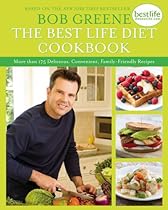
The Best Life Diet Cookbook: More than 175 Delicious, Convenient, Family-Friendly Recipes


The Best Life Diet Cookbook: More than 175 Delicious, Convenient, Family-Friendly Recipes

Best-life advocate Bob Greene positions the ideas in this cookbook as a "gift that you give to yourself and your loved ones." Home-cooked meals made from fresh, natural ingredients will make you feel better, live longer and bond with your family and friends. Makes sense to me. And if you just want to cook yummy foods, these dishes are delicious.

They are also nutritious, and all the details for each serving are at the end of each recipe: calories, protein, carbohydrate, dietary fiber, sugar, total fat, saturated fat, cholesterol, calcium and sodium.

Easy-to-follow meal plans are broken down into three sections. Quick and Easy meals take no more than 20 minutes to prepare, Kitchen Connoisseur choices are a little more adventurous, and Family-Friendly meals offer healthy versions of family favorites. Each meal plan has six calorie levels: 1,500, 1,600, 1,700, 1,800, 2,000 and 2,500 calories a day.

Although most of the recipes are geared to busy families with little time to spend in the kitchen, there is a whole chapter of wonderful, healthy dishes from accomplished chefs. These recipes may take a little longer than the 30 minutes or so the other recipes require to prepare. Some of the chefs participating include Mollie Ahlstrand of Trattoria Mollie, Dan Barber of Blue Hill, Sarma Melngailis of Pure Food and Wine, Charlie Trotter of Charlie Trotter's and Roy Yamaguchi of the 35 Roy's Restaurants around the world. Ahlstrand's Zuppa di Pomodoro is a flavorful take on tomato soup that uses garlic, brandy, rosemary and orange juice.

In the back is a handy Techniques tutorial showing how to roast garlic, toast nuts, section citrus, clarify butter and the like.

Other good choices for healthy cookbooks include Deceptively Delicious, Hungry Girl: Recipes and Survival Strategies for Guilt-Free Eating in the Real World and The Most Decadent Diet Ever.

The Eat This Not That! series is also excellent.

Here's the chapter list:
1. Introduction
2. Recipes
3. Breakfast
4. Soups
5. Salads
6. Sandwiches, Wraps and Crispbreads
7. Entrees: Meat, Poultry, Seafood, Vegetarian
8. Side Dishes: Grains, Vegetables
9. Calcium-Rich Snacks
10. Desserts
11. Best-Life Recipes from World-Class Chefs
12. Meal Plans
13. Basic Recipes
14. Techniques

Reviewed By : Julie Neal "The Complete Walt Disney World" : Jan 8, 2009

Click to see Book Details & Price of The Best Life Diet Cookbook

Thursday, January 8, 2009

Jeffrey Gitomer's Little Teal Book of Trust: How to Earn It, Grow It, and Keep It to Become a Trusted Advisor in Sales, Business and Life (Jeffrey Git


Jeffrey Gitomer's Little Teal Book of Trust: How to Earn It, Grow It, and Keep It to Become a Trusted Advisor in Sales, Business and Life (Jeffrey Gitomer's Little Books)

This is an important and excellent book. (You will maybe appreciate my tongue-in-cheek headline after reading the first Chapter.)

Like so many others, I am a huge fan of Jeff Gitomers' sage, straightforward advice on selling and subjects tangentially related to his core expertise in the sales process. But, Gitomer has outdone himself with this absolute gem.

In a world where (some) businesses and politicians are almost daily demonstrating why they can't be trusted, the subject of "trust" needs to be written about. And, this well timed book is a great primer on the subject.

Now writing about "trust" is not easy. Who is a "trust" expert? Well the subject is a perfect one for Gitomer who manages to plead for us to do things better in a style that doesn't come over as unduly "preachy." And, he does so with his usual well organized, logical explanations. He does a great job of succinctly explaining the context of trust, it's benefits and ultimately its value, more than 20 characteristics of trust, and how to recover from a breach of trust (which can happen among us humans).

Best of all, his thoughts on becoming a trusted business advisor make this a book that every professional should read, study, implement and then re-read. As an advisor to leading professional service firms, I have already started giving the book to clients.

Regretfully, I expect that some who need this book most will never buy it as they see themselves as already fully trustworthy. Respectfully, I would suggest that few among us would not benefit from a tune-up in this area. Including the many whom start off conversations, as I did this review, with the commonly used phrase "trust me."

As an voracious reader of business and self-help books (and a reviewer here on Amazon of the best of that which I read), I consider this one of the most important books, in those two categories, in the last ten years. It really is that good! And that important!!

Reviewed By : D. Carpenter "Peak Performance Scholar" : Jan 6, 2009

Click to see Book Details & Price Jeffrey Gitomer's Little Teal Book of Trust